
Behavioral Finance Investing: Avoid Mistakes
Fear, greed, and biases cost you returns. Learn to recognize and neutralize them with checklists, rules, and tools like BeursGrafiek & TransFolio.

“Our biggest opponent is often not in the market, but in ourselves.” Behavioral finance explains why smart people still do stupid things with money. We overestimate ourselves, hate losses more than we appreciate gains, and are swayed by recent events. Good news: with the right rules, routines en tools You can significantly reduce these pitfalls. Read on to avoid behavioral finance investing.
The Big Three Biases
- Loss aversion: Losses hurt twice as much as profits give pleasure → take profits too quickly, let losses run.
- Overconfidence: We overestimate our predictive power → positions too large, too little diversification.
- Recency & Confirmation: Recent information carries too much weight; we seek confirmation of our opinion.
From feeling to rules
You tame emotions by decision rules to be determined and followed in advance:
- Entry: objective trigger (trend, RS, breakout + volume).
- Stop & sizing: fixed risk-per-position (e.g. 0,5–1%), stop at 1,5–2× ATR outside support.
- Exit: in case of trend break, price target or deteriorating RS.
- Newspaper: write reason, expectations and aftercare; learning = profit.
Visualizing reduces bias
A good chart enforces objectivity. You can clearly see where support/resistance lies, or where volume is a breakout. confirms and whether your trade idea is still sound. Less noise = fewer impulsive decisions.
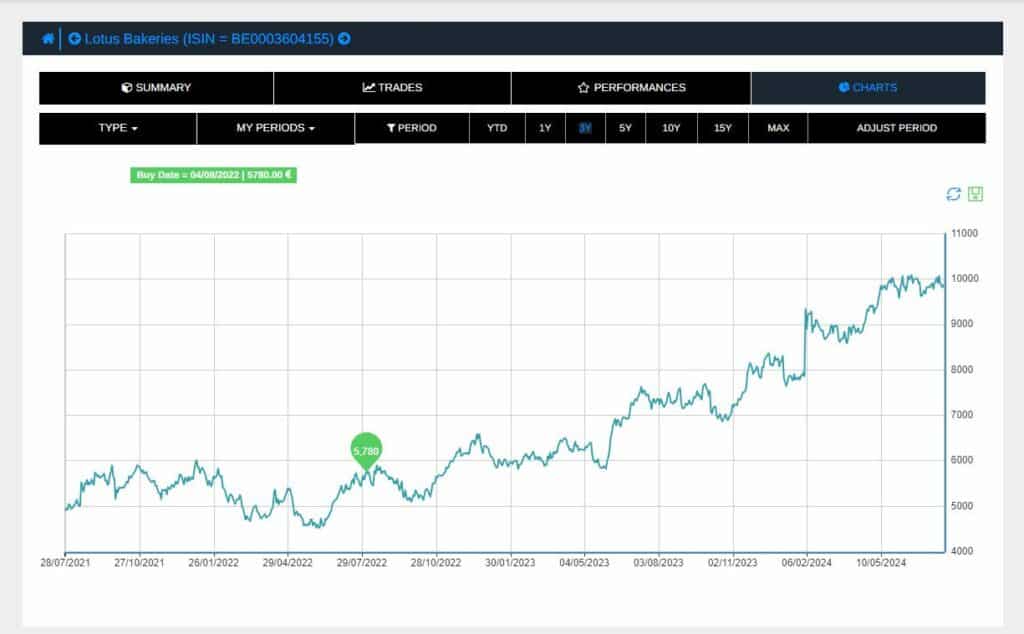
Clear graphs without noise? StockChart provides clear charts, watchlists and simple signal studies.
Structure in your portfolio
Emotions often arise in the absence of overviewKnowing exactly what your positions weigh, which sectors dominate, and how your returns are structured makes decision-making more rational. That's where reporting makes all the difference.
- Weights & limits: see which positions are becoming too large.
- Attribution: which sectors/choices contributed to the result?
- Re-weighing signals: limit drift towards too much risk.
Want to strengthen your discipline? TransFolio centralizes returns, limits and reweightings so you can control your rules lasts Follow.
Daily micro habits
- Time window: check positions at fixed times (EOD), not every quarter of an hour.
- Checklist: Before each trade, tick the 5 boxes (trend, RS, risk, plan, reason).
- Stop at system level: on X consecutive errors: pause, review, adjust rules.
- Pre-mortem: “What could go wrong?” → prepare countermeasures.
Pitfalls & remedies
- FOMO: chasing a breakout without a plan. Remedy: awaiting retest or clear validation.
- Denying loss: do not take exit. Remedy: automatic stop and compliance.
- Overtrading: too many decisions. Remedy: limit the number of setups; quality > quantity.
Mini-FAQ
Conclusion for behavioral finance investing
Behavioral finance teaches us that rules en overview The best protection against ourselves. Clear charts with checklists (BeursGrafiek) and portfolio reporting with rebalancing signals (TransFolio) make it easier to do the right things—even when it feels difficult.
This blog is for educational purposes only. It does not constitute personal investment advice.